Stories of Growth: KAMIM Technologies

April 22, 2026
AQ5A0475 (1)

For years, farmers across Epe and Ijebu in Lagos state have struggled to keep their produce fresh after harvest, without access to reliable cold storage, fruits, vegetables, and other perishables spoiled within days. This forced many to sell quickly at low prices or lose their goods entirely, leading to depressed incomes or significant post-harvest losses.

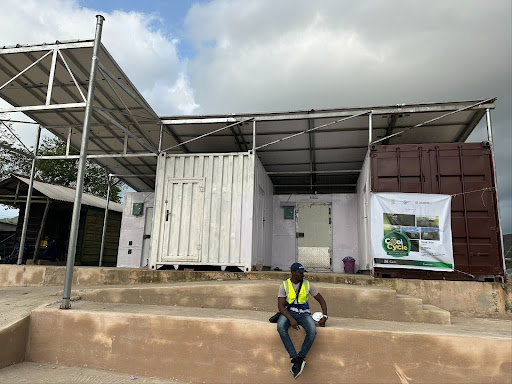
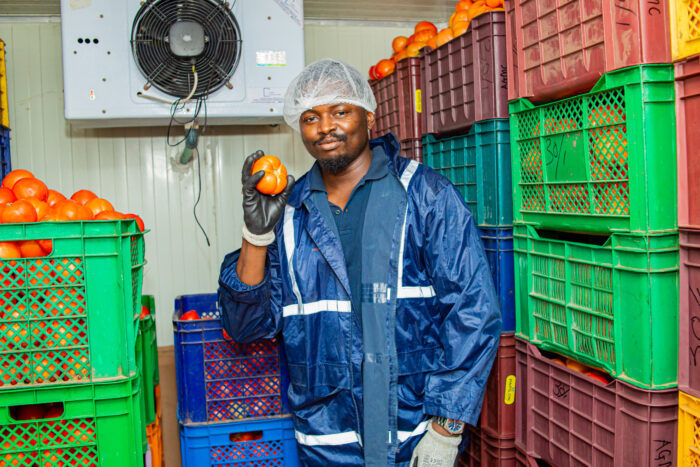
That changed when KAMIM Technologies, co-founded by Adekoyejo Kuye, introduced solar-powered cold storage hubs designed for smallholder farmers. Through a simple pay-as-you-store “Cooling-as-a-Service” model, farmers can now effectively store their produce for a fee of ₦250 – ₦500 ($0.18 – $0.37) per crate, depending on the volume and location. Each cold storage unit, with a 5-10 ton capacity, is fully solar-powered and built to serve clusters of farmers and aggregators year-round.

unnamed (25)

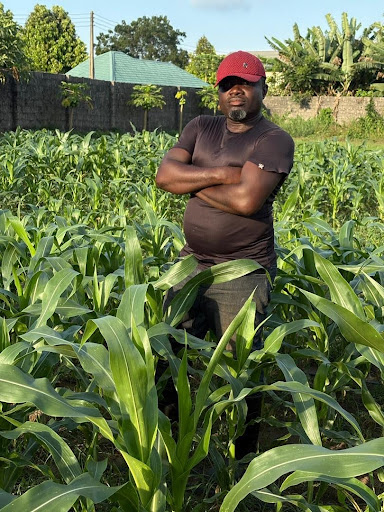
“Before KAMIM, I used to lose almost half of my harvest,” says Abdullateef (Lateef) Otunba, a tomato and corn farmer of ten years. “Tomatoes spoil easily, and once the sun rises, you start losing money. Now, I can store them for three to five more days. I sell at a better price and no longer rush to the market in panic.”

Lateef explains that the difference has been life-changing. Farmers in his community are now earning significantly more per harvest, as much of their produce reaches the market in good condition. “The cold room does not just help us sell better; it gives us time to plan,” he says. “I have expanded my farm and even increased my corn production by 50% because I know I won’t lose half of it anymore.”

unnamed (26)

For Augustine Owezie, an aggregator working with smallholder farmers across the Ijebu area, the transformation goes beyond individual farmers. Through partnerships with local groups such as the Eweko Aggregate and South West Farmers Associations, KAMIM connects with farmer networks that help collect, store, and distribute produce to urban markets.

Over time, KAMIM’s model has evolved. Through its initial vegetable cooling partnerships, including with the Eweko Aggregate, the company gathered valuable insights that helped it better understand market demand and adapt its approach. This experience laid the groundwork for KAMIM’s expansion into poultry and meat freezing facilities.

These collaborations have been instrumental in linking rural producers to KAMIM’s cold storage facilities and ensuring farmers understand and use the technology effectively. “Before, I had to sell everything quickly, even at low prices, to avoid losses,” Augustine recalls. “Now I can store what I buy, monitor prices, and sell when the market is right. Many farmers in our network have seen their profits increase by about 40%, with some growing their revenue from ₦4 million to ₦7 million annually.”

With storage, farmers have greater control over timing and pricing. Otunba, who sells mainly to buyers in Epe and Mile 12, two of Lagos’s largest produce markets, says, “Now, when buyers come, I can wait for a better offer instead of rushing to sell. That is how I make real profit.”

The data from KAMIM’s team supports these experiences. Farmers have reduced post-harvest losses from nearly 50% to just 5–6 kilograms out of every 630 kilograms stored, a 90–95% reduction in waste. Across the network of users, income has risen between 30% and 50%, and many farmers have used their new profits to buy vehicles, build homes, and purchase land for expansion.

“Our goal is to create stability for farmers,” says KAMIM cofounder Adekoyejo. “When a farmer can store produce safely, he can plan better, earn better, and live better. And that is how you transform communities, one harvest at a time.”
unnamed (27)

KAMIM currently operates three walk-in commercial solar-powered cold rooms in Lagos and Ogun States, collectively serving more than 300 farmers and aggregators. This includes a 10-ton facility in Epe dedicated to poultry and fish, supported by Innovate UK, which can reach temperatures as low as –20 to –30°C to preserve perishable goods in the riverine area. Each site functions as a community hub, offering energy access, produce sorting space, and mobile phone charging stations in areas without power.

The company’s model blends energy-as-a-service and cooling-as-a-service, ensuring farmers pay only for what they use, with no investment required.

KAMIM’s journey is supported through the GET.invest Finance Readiness Support, part of GET.invest – a European programme mobilising clean energy investments, co-funded by the European Union, Germany, Norway, the Netherlands, Sweden, and Austria. The service is implemented by eight leading advisory firms, including Persistent.

The support to KAMIM was delivered through GET.invest Nigeria, a GET.invest Country Window established in October 2024 with funding from the European Union and Germany. It builds on the broader GET.invest programme to unlock financing for sustainable energy projects and businesses, while tailoring its support to the Nigerian context.

Through GET.invest, Persistent has worked with KAMIM to strengthen its financial planning and investment readiness while also helping the company build stronger business fundamentals. This includes understanding customer traction, conducting field research to identify potential offtakers, and developing a sustainable pricing model that ensures long-term viability as KAMIM scales.

KAMIM plans to deploy 12 new hubs within the next 12 months. “Supporting Koye and his team as they refine and scale their business model has highlighted their focus and determination to succeed, reflecting true venture-building discipline. They have demonstrated the entrepreneurial grit, adaptability, and professionalism needed to thrive. At Persistent, we have been proud to support KAMIM in shaping its growth journey, turning advisory into action as the company positions itself to unlock the immense potential of renewable-powered cold chain infrastructure across the region.” Elie Bitar, GET.Invest Coordinator, Persistent