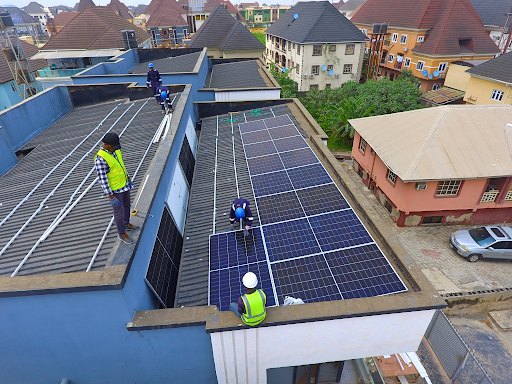
Through an integrated model that combines system design, procurement, installation, and ongoing maintenance, Kiru Energy enables customers to transition away from unreliable grid power and expensive fossil fuel generators toward dependable solar energy. It does this by offering solar panels and battery storage products. The company primarily serves households and SMEs, segments that are heavily impacted by energy unreliability but often lack access to affordable and scalable clean energy solutions. By focusing on these customers, Kiru Energy is positioning itself as a key player in Nigeria’s transition toward decentralized, clean energy systems.
Kiru Energy installs integrated solar panels and battery storage, allowing customers to generate electricity during the day and store power generated for use during outages or at night. The company has deployed a wide range of systems, from small-scale solutions starting at around 500W to larger commercial installations of up to 32kW, depending on customer needs. These systems are powered primarily by lithium batteries, which offer higher efficiency and a typical lifespan of 8 to 10 years.
This combination provides a more stable and predictable power supply while significantly reducing reliance on fuel-based alternatives. For many customers, this translates into meaningful cost savings, with Kiru Energy solutions delivering over 60% savings on energy costs compared to generator usage, and typical payback periods ranging between 6 to 18 months.
Kiru Energy’s end-to-end customer servicing approach gives it a level of flexibility and reliability that purely product-focused competitors struggle to replicate, and positions it to evolve into a service-driven business as it scales.
To serve different customer needs, Kiru has developed a range of tailored solutions:
- PawaHauz: A residential solar solution designed to provide reliable and continuous electricity for households. Systems are typically tailored within Kiru’s broader deployment range, from small-scale setups starting at around 0.5 kW to several kW, depending on household energy needs.
- PawaBiz: Built for small and medium-sized businesses, PawaBiz supports higher energy demands required for commercial operations. These systems are usually configured at the mid- to higher-end of Kiru’s range, scaling up to tens of kilowatts based on business requirements.
- Mini-Grid in the City: A scalable solution for real estate developments and communities, enabling multiple users to access shared solar power infrastructure. These systems operate at larger capacities, often approaching the upper end of Kiru’s deployments (up to 32 kW and beyond, depending on configuration), delivering reliable electricity at scale.
- PawaStation: A modular and portable power solution designed for remote workers, creatives, and small-scale users. PawaStation systems vary by capacity, with PawaStation 1 typically starting at around 1kVA, PawaStation 2 at approximately 2kVA, and PawaStation X offering higher-capacity configurations depending on user needs. These distinctions allow customers to choose solutions based on their power requirements, while maintaining flexibility in system configuration. PawaStation provides an accessible entry point into clean energy, delivering reliable backup power and reducing dependence on generators for everyday productivity.
Across its offerings, Kiru Energy combines flexible system design with both upfront and installment-based payment options. Kiru Energy stated that about 75% of their customers pay upfront; however, the company also provides financing plans ranging from 6 to 24 months, helping to lower the barrier to adoption for clean energy solutions.
What sets Kiru Energy apart from mainstream providers is its economic model, built with commercial discipline from the ground up. By keeping overheads low and ensuring that each installation is profitable, the company avoids the trap many early-stage solar businesses fall into: growing fast while burning through capital.